

UPI Charges Above ₹2,000 From 15 October: Do You Have to Pay?
UPI charges above ₹2,000 start 15 October as a 0.4% merchant fee (MDR). Who pays, what stays free, small shop rules and what changes for you.
UPI charges above ₹2,000 start on 15 October 2026, but not in the way most WhatsApp forwards say. It’s a 0.4% fee called MDR, and it’s paid by the merchant’s side. You, the customer, don’t pay it. Sending money to friends and family stays completely free.
Here’s exactly what changes, what doesn’t, and what to do if a shopkeeper tries to add “UPI charges” to your bill.
| Detail | Information |
|---|---|
| What | Merchant Discount Rate (MDR) on UPI merchant payments |
| Starts | 15 October 2026 |
| Announced by | NPCI circular OC-No.237/2026-27, dated 15 September 2026 |
| Rate | 0.4% on person-to-merchant (P2M) payments above ₹2,000 |
| Maximum fee | ₹300 per payment (for payments of ₹75,000 and above) |
| Railways, telecom, insurance, fuel, farm inputs | Flat ₹5 per payment above ₹2,000 |
| Mutual funds, stocks, brokers | 0.02%, capped at ₹300 |
| Person-to-person (P2P) transfers | Free, any amount |
| Merchant payments up to ₹2,000 | Free |
| Small merchants (up to ₹1 lakh/month via QR) | Free, even above ₹2,000 |
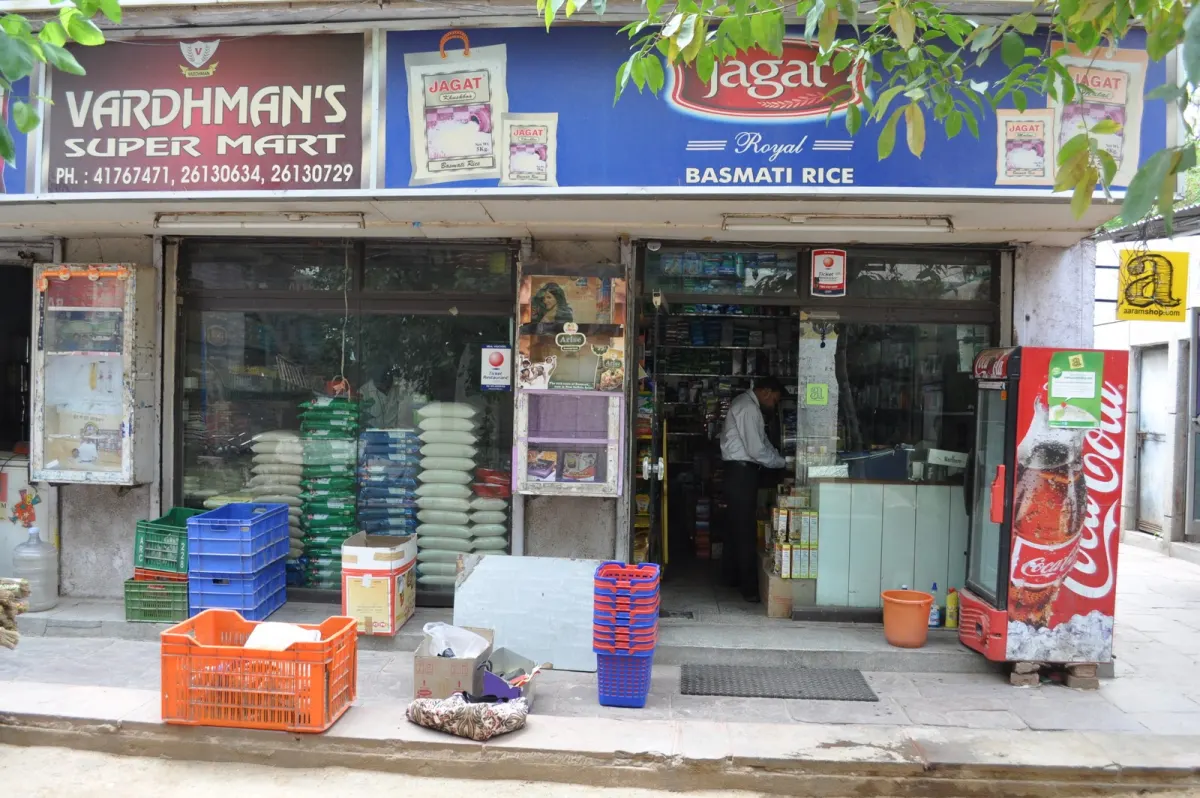 The fee is charged to merchants, not customers, and small shops can be exempt. Photo: Renzilde / Wikimedia, CC BY-SA 3.0
What is MDR, in simple words?
MDR (Merchant Discount Rate) is a small fee taken from a shop’s payment when it accepts digital money. Card payments have always had it. That’s why some shops used to say “card pe 2% extra”.
UPI had zero MDR for about six years. Banks and apps like PhonePe, Google Pay and Paytm ran the system without earning anything on most payments. From 15 October, they’ll get a small cut on bigger merchant payments.
The Finance Ministry has said clearly that MDR is not a tax, and the government or NPCI doesn’t collect it. It’s split among the banks, payment companies and UPI apps that process the payment.
UPI charges above ₹2,000: who actually pays?
The merchant’s side pays. Not you.
Say you buy a ₹10,000 phone at a big electronics store and pay by UPI. The store receives ₹10,000 minus 0.4%, so ₹40 is deducted on the store’s side. You pay ₹10,000. Nothing more.
The Finance Ministry’s 15 September press release says three things that matter for customers:
- Banks have been told to make sure merchants don’t pass MDR on to customers.
- UPI apps are expressly prohibited from adding platform fees or hidden charges.
- There’s no monthly limit on free UPI use for individuals. No quotas, no tiers.
So if your UPI app suddenly shows a “convenience fee” on a normal payment after 15 October, that’s against the rules.
What stays completely free
Most of your daily UPI use won’t change at all:
- Sending money to a person (friend, family, roommate, or a landlord’s personal UPI ID): free, any amount. These transfers make up about 70% of all UPI money by value, as per the government.
- Paying any shop ₹2,000 or less: free. Your tea, groceries, auto fare, recharge and most food orders fall here.
- Paying small shops of any amount, if the shop is in the small merchant category (explained below).
The government says only about 4% of merchant payments will attract MDR. The other 96% stay free.
The small shop rule (P2PM)
This is the part most people are getting wrong.
A lot of street vendors and neighbourhood shops use a personal-style UPI QR. Under the new framework, they fall in a category called P2PM (Person-to-Person-Merchant). If such a shop receives up to ₹1 lakh a month through UPI QR, it keeps zero MDR on every payment.
That includes single payments above ₹2,000. So if you pay your local kirana uncle ₹3,500 for the month’s ration, he doesn’t lose anything.
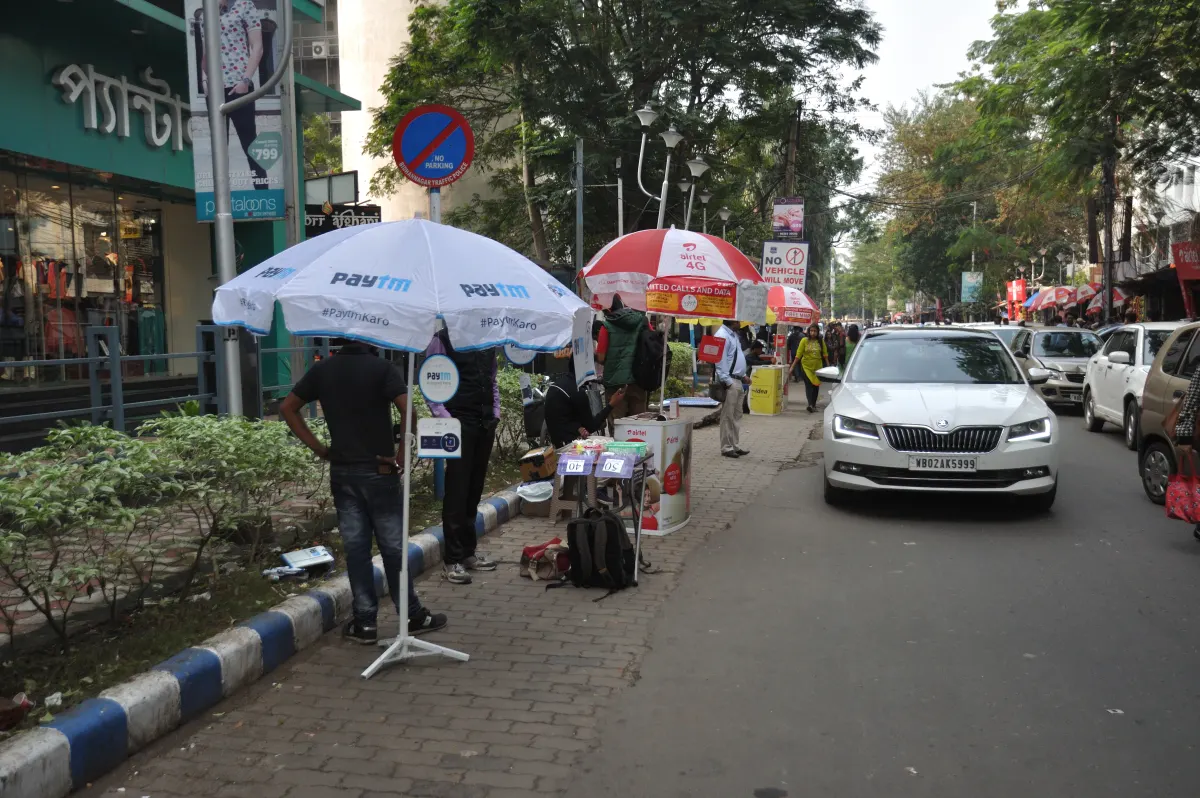 Payment app stalls on a Kolkata street. Photo: Biswarup Ganguly / Wikimedia, CC BY 3.0
The government has also said 5% of all MDR collected will go into a fund to help small merchants adopt UPI.
One detail isn’t in the press release: exactly when a growing shop moves out of P2PM into the regular merchant category. Some news reports quote government FAQs saying it happens after a shop crosses ₹1 lakh a month for three months in a row. If you run a small business, confirm this with your bank before you plan around it.
Where you’ll see the fee (on the merchant’s side)
| Payment | Example | Fee on merchant’s side |
|---|---|---|
| Shop payment, ₹2,000 or less | ₹1,500 groceries | ₹0 |
| Shop payment above ₹2,000 | ₹10,000 phone | ₹40 (0.4%) |
| Big shop payment | ₹1,00,000 laptop | ₹300 (cap) |
| Train ticket, recharge, fuel, insurance above ₹2,000 | ₹3,000 train ticket | Flat ₹5 |
| Mutual fund SIP or stock purchase | ₹10,000 SIP | ₹2 (0.02%) |
| Transfer to a person | ₹20,000 to a friend | ₹0 |
Again, all of these are paid by the receiving side, not by you.
What it means for you
For students and regular users: almost nothing changes. Keep using UPI the same way. Just watch out for shops that try to add a surcharge (more on that below).
For people who run a small business or freelance: check which category your QR falls under. If you’re on a personal QR and receive under ₹1 lakh a month, you’re fine. If you’re on a merchant/business QR with bigger sales, you’ll start seeing 0.4% deducted on payments above ₹2,000. On ₹5 lakh of such sales in a month, that’s ₹2,000.
For job seekers in fintech: this is the first real income UPI has given banks and apps in years. Expect payment companies to push harder on merchant sales and small-business products. It’s worth knowing this topic well if you’re interviewing at PhonePe, Paytm, Razorpay or any bank’s digital team.
What if a shop asks you to pay extra?
This will happen. Some shops already add “card charges”, and a few will try “UPI charges” after 15 October.
- Politely say the fee is on the merchant’s side and the government has said it can’t be passed on.
- If they still insist, pay the bill amount only if you’re comfortable, or pay in cash.
- Complain to the shop’s bank (the name shows on the QR or in your app after payment) or through your UPI app’s help section.
- You can also raise a complaint on the NPCI website under its UPI dispute redressal section.
Honestly, for small amounts most people won’t bother arguing. But for ₹20,000+ purchases, 0.4% is ₹80 or more, so it’s worth pushing back.
What’s still unclear
- How strictly banks will stop merchants from adding surcharges. The rule exists, but enforcement at the shop counter is a different story.
- Whether big merchants will quietly raise prices instead of adding a visible fee.
- The exact process for moving a shop from P2PM to the regular merchant category (see above).
My take
The headline “UPI is no longer free” is wrong for 96% of payments and for every transfer between people. If you’re a student or job seeker paying for food, recharges and small things, nothing changes for you.
The one habit worth building: check your final amount before you pay above ₹2,000 at any shop. If you see an extra “UPI charge”, you now know it isn’t allowed.
Paying a govt exam fee by UPI? Those are well under ₹2,000, so nothing changes there. If you’re applying for SSC CHSL 2026 before the 7 October last date, just pay early to avoid the server rush. You can read the full official clarification on the PIB website.
Frequently asked questions
Will I be charged for UPI payments above ₹2,000 from 15 October?
No. The 0.4% MDR is a fee paid by the merchant's side, not by the customer. The Finance Ministry says banks have been told to make sure merchants don't pass it on to customers.
Is sending money to friends and family on UPI still free?
Yes. All person-to-person (P2P) UPI transfers stay completely free, whatever the amount.
What is the UPI MDR rate from 15 October 2026?
0.4% on person-to-merchant payments above ₹2,000, capped at ₹300 for payments of ₹75,000 and above. Railways, telecom, insurance, fuel and agricultural inputs pay a flat ₹5 per payment above ₹2,000, and mutual funds and stockbroking pay 0.02%, capped at ₹300.
Do small shops have to pay MDR on UPI?
Not if they receive up to ₹1 lakh a month through UPI QR under the P2PM (small merchant) category. They keep zero MDR on all payments, even single payments above ₹2,000.
What should I do if a shop asks for extra money for a UPI payment?
Refuse politely and pay the bill amount. If they insist, complain to the shop's bank or the UPI app's support, and you can also raise a complaint through the NPCI dispute redressal page.
Is the UPI MDR a tax collected by the government?
No. The Finance Ministry has clarified that MDR is neither a tax nor a charge collected by the government or NPCI. It is shared among banks, payment companies and UPI apps.